Wednesday, October 04, 2006

5x7 LED Matrix Blinkie Kit

This is a 5x7 LED Matrix Blinkie Kit. Its a 1.8 by 2.95 double-sided circuit circuit board with a mounting pin on the back side, that requires assembly and soldering. Patterns and text scroll on a matrix made up of 35 leds, which can be single-color or bi-colored depending on the fireware. Yes, there is an IR emitter and receiver for two way communication to other blinkie boards. This blinkie design was introduced at Duckon 15

Check out:

http://www.2dkits.com/

A lot of LEDs from a few microcontroller pins

Using the fact that many microcontroller pins have three states (+V, GND, or "high impedence", you can drive N*(N-1) LEDs from N pins. So the little 8 pin microcontroller like a PIC12Fxxx or an ATtiny11 can drive 20 LEDs on its five available output pins, and still have one pin left for so me kind of input.

http://www.instructables.com/id/ED0NCY0UVWEP287ISO/

Friday, September 29, 2006

Serial Controlled RGB LED PWM Driver

If you want to build your own multiple RGB LED display that you can control from either a PC or a dedicated controller then this project will let you do just that.

http://www.petesworld.demon.co.uk/homebrew/PIC/simplergb/index.htm


Controlling a RGB Led using PWM

Nice little tutorial

http://home.wanadoo.nl/electro1/avr/rgbled.htm

Green

Switching between Red, Green and Blue with an AVR microcontroller (non PWM)

Pixel Sumo

http://www.pixelsumo.com/about/

This site
Pixelsumo is a site devoted to sonic art, audiovisual fusion, physical interaction, open source technologies, hacking video game culture, responsive environments & installations.

The author
Chris O'Shea

Chris O’Shea is a creative technologist and electronic artist based in London. His interests are in creating physical audiovisual environments using open source processes and appropriated technology.

Last year he became a First Class Honours graduate in MediaLab Arts at the University of Plymouth, and was also a part-time Research Assistant at the Institute of Digital Art & Technology (i-DAT). Chris has also talked about his work at various events in Europe.

more information: www.chrisoshea.org

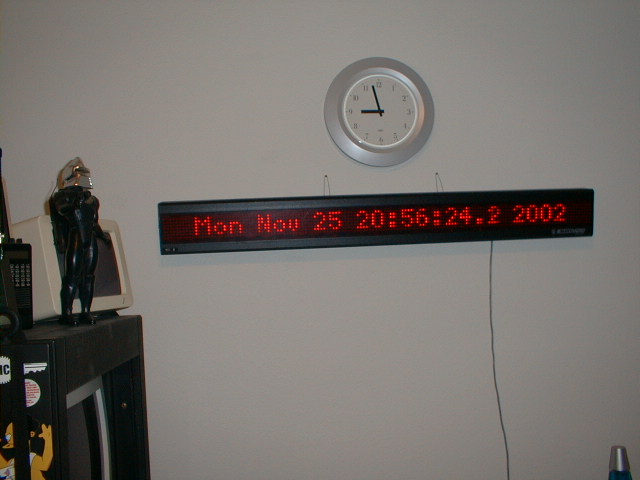
Your Own Scrolling LED Sign

Learn how noisybox built his own scrolling LED sign. Pretty Cool.

http://noisybox.net/electronics/LED_sign/

LED Forum

Looks like a good place to post questions, and read what others are doing.

http://www.eio.com/public/led/

Electronic Textiles: Loop.pH

Rachel Wingfield and Mattias Gmachi work together as Loop.pH, a design and research studio which investigates and creates new surfaces and structures. Their reactive surfaces are often inspired by natural forms and processes, expressed as both 2-D and 3-D forms using light, colour and electroluminescent technology. The pictures above show Digital Dawn, a light reactive window blind.

http://www.prusikloop.org/mrwatson/?p=73

LED THROWIES

Here is a link for LED Throwies

http://www.instructables.com/tag/LED/Art/

Read all about it.

Hacked Gadgets - LED CUBES

Here is a link from Hacked Gadgets showing some LED Cubes.

http://hackedgadgets.com/2006/03/10/led-cubes/

It shows four or five examples of LED Cubes with links to other pages.

The 3D LED Cube - Chris Lamont

The 3D LED Cube was a project started by Gene Foulk and Chris Lamont to create a large, animated, self contained visualization cube of LEDs, mostly for artistic purposes. Read More:

http://www.lomont.org/Projects/LEDCube/LEDCube.php

The Cubatron

The Cubatron was the world's largest true 3D color graphics display from 2004-2006 (now overtaken by the Big Round Cubatron). It is 8x8x8 feet in size. It consists of 729 voxels (3D pixels) arranged in a 9x9x9 matrix, spaced 10 inches apart from each other. Each voxel is a 40mm diameter ball that can be independently set to display a 21-bit RGB color. The entire display can be updated about 30 times per second. The voxels "float" in space so that the viewer can see through the cube and have a view of most of the voxels from any position. Read More:

http://www.nw.com/nw/projects/cubatron/

Thursday, September 28, 2006

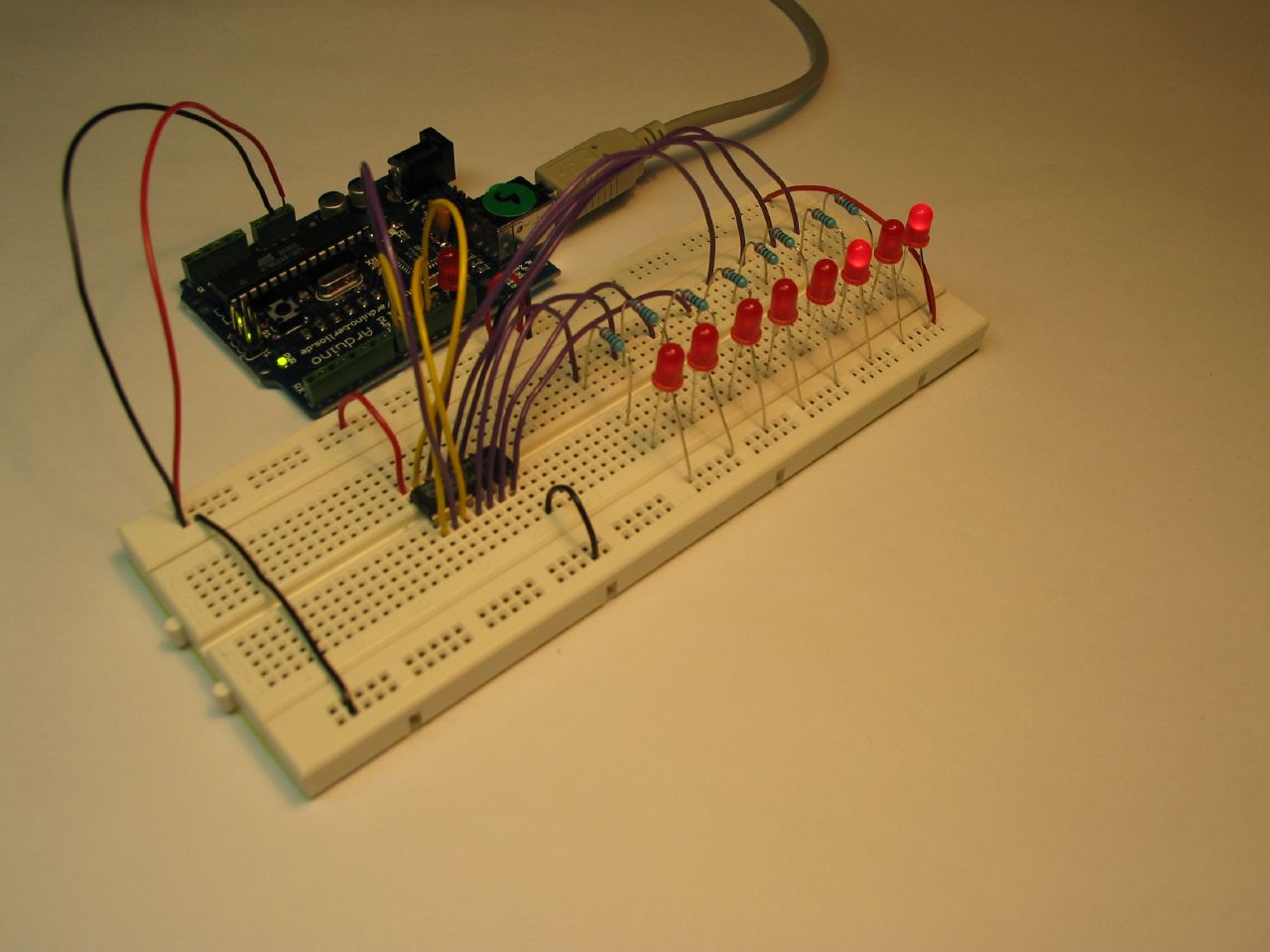
Arudino LED Driver example

Arudino LED Driver example

http://www.arduino.cc/en/Tutorial/LEDDriver